SEARCH

 = Registered users
 = Paid-up subscribers
Abu-Ghanem Y, Darwish R, Challacombe B. Prompt diagnosis of epididymo-orchitis can prevent complications. Practitioner April 2022;266(1857):17-20
Prompt diagnosis of epididymo-orchitis can prevent complications
25 Apr 2022
AUTHORS
Miss Yasmin Abu-Ghanem BSc MBBS MD, Locum Consultant Urological Surgeon
Mr Raef Darwish BSc, Year 5 Medical Student
Mr Ben Challacombe BSc PGCert MS FRCS(Urol), Consultant Urological Surgeon
The Urology Centre, Guy’s and St Thomas’ Hospitals, London, UK
Competing interests: None
Article
Epididymo-orchitis is an inflammation of the testis and epididymis, generally of infectious origin. In young men epididymo-orchitis is most often associated with sexually transmitted infections (STIs) namely Chlamydia trachomatis and Neisseria gonorrhoeae. In those aged over 35 the causative pathogens are more likely to be non-sexually transmitted coliform organisms associated with urinary tract infections (UTIs) such as Escherichia coli and Pseudomonas spp. Other causes include viral infections such as mumps in immunocompromised, non-immunised or prepubescent males, local trauma, and medication such as amiodarone. The most important differential diagnosis is torsion of the testis/spermatic cord. This is a surgical emergency and should be excluded as a priority as testicular salvage is required within 6 hours of onset to conserve the testis. The majority of cases of torsion occur in adolescents, which overlaps with the peak incidence of epididymo-orchitis in the 14-35 years age range. A less common differential diagnosis is testicular tumour, with up to 20% of tumours presenting with pain as the primary symptom. Examination of the scrotum should be performed both with the patient standing and lying down, looking out for signs of an enlarged and erythematous scrotum, a thickened epididymis and signs of trauma or urethral discharge. It is vital to check for a solid mass and to examine the position of any swelling in relation to the testis (testicular, extra-testicular), the size and symmetry of the testes.
Epididymo-orchitis is an inflammation of the testis and epididymis. It is generally infectious in origin. Epididymo-orchitis is a common urological condition with a reported annual incidence of around 2.5 cases per 1,000 men in a UK primary care study.1
In young men epididymo-orchitis is most often associated with sexually transmitted infections (STIs) namely Chlamydia trachomatis and Neisseria gonorrhoeae. In those aged over 35 the causative pathogens are more likely to be non-sexually transmitted coliform organisms associated with urinary tract infections (UTIs) such as Escherichia coli and Pseudomonas spp.2
Other causes include viral infections such as mumps in immunocompromised, non-immunised or prepubescent males, local trauma, and medication such as amiodarone.3
Early diagnosis and management are essential as serious complications can include abscess formation, testicular infarction, and infertility.
Risk factors
Risk factors that can increase the chance of developing epididymo-orchitis are listed below:3,4
• STIs
• HIV infection
• Men who have sex with men
• Riding bicycles or motorbikes
• Strenuous physical activity and dehydration
• Periods of inactivity or sitting
• Recent urinary tract instrumentation or surgery e.g. catheterisation, transrectal prostate biopsy, and cystoscopic procedures3
• Anatomical abnormalities resulting in bladder outflow obstruction such as urethral strictures, benign prostatic hypertrophy and prostatic cancers
• Mumps
Presentation 5,6
The majority of cases present with an acute onset of testicular pain, often with local swelling. Local testicular tenderness is typically unilateral starting from the tail of the epididymis and spreading to involve the whole of the epididymis and testis. Erythema or oedema of the scrotum may be present. There may be a reactive hydrocele in the scrotum.
Symptoms of urethritis such as urethral discharge, dysuria and penile irritation are more common in patients with STIs.
Men with epididymo-orchitis may present with symptoms of UTI such as dysuria, frequency and urgency. Recent viral illness with a lack of vaccination history or parotitis may point towards a mumps orchitis.
Differential diagnoses
Differential diagnoses for epididymo-orchitis are shown in table 1.
The most important differential diagnosis is torsion of the testis/spermatic cord. This is a surgical emergency and should be excluded as a priority as testicular salvage is required within 6 hours of onset to conserve the testis.7
The majority of cases of torsion occur in adolescents. This age group overlaps with the peak incidence of epididymo-orchitis which occurs at 14-35 years.8,9 While epididymo-orchitis can occur in all ages it is imperative to rule out torsion as a differential diagnosis in the 14-35 years age group to avoid long-term complications.
A less common differential diagnosis is testicular tumour, with up to 20% of tumours presenting with pain as the primary symptom. These patients are often mistakenly investigated for epididymo-orchitis, resulting in a delayed diagnosis which leads to further delays in treatment.10
Assessment 5
The first step in evaluating a patient with suspected epididymo-orchitis is to take a thorough history, assessing the risk of STIs as well as the risk of an enteric organism associated with UTIs. It is also important to consider less common causes such as mumps orchitis.
The history should cover:
• History of trauma (often associated with haematocele) or strenuous physical activity
• Current and previous sexual history
• History of STIs (e.g. chlamydia, gonorrhoea)
• HIV infection
• History of lower urinary tract symptoms (LUTS)
• Any previous episodes or previous UTIs
• Previous abdominal or pelvic surgery including inguinal hernia repair
• Previous interventions such as varicocele surgery or surgery for undescended testis
The patient should be assessed for scrotal pain; the location (unilateral or bilateral) and radiation to surrounding structures. The duration and severity and exacerbating factors (such as activity or positional changes) should be noted. Any associated scrotal swelling or mass should be looked for.
It is important to enquire about associated symptoms, such as nausea or vomiting, abdominal pain, or urethral discharge. Parotid swelling suggests mumps orchitis.
Physical examination 11,12
It is essential to ensure that the patient’s privacy and comfort are maintained during the examination.
Examination of the scrotum should be performed both with the patient standing and lying down, looking out for signs of an enlarged and erythematous scrotum, a thickened epididymis and signs of trauma or urethral discharge.
It is important to observe the patient’s face for signs of tenderness during scrotal examination. It is essential to check for a solid mass and to examine the position of any swelling in relation to the testis (testicular, extra-testicular), the size and symmetry of the testes.
In later stages the hemiscrotum can also be oedematous. Palpation of the epididymis is often painful in this condition and therefore it is recommended to begin with the unaffected side. A rectal examination should also be performed to check for prostate pathology when appropriate. The presence of the cremasteric reflex (gentle pinching or stroking of the medial thigh usually causes elevation of the ipsilateral testicle) should be tested. The cremasteric reflex may be absent in testicular torsion due to the torsion impacting on the twisted cremaster muscle’s contraction.
Prehn’s sign may also be elicited, with the pain being relieved upon elevation of the affected side, however this does not conclusively exclude torsion. If there is any doubt about a diagnosis of epididymo-orchitis the patient should be referred immediately for surgical assessment to exclude testicular torsion.
An examination for inguinal hernias, such as a palpable bulge in the inguinal canal or positive cough impulse should also be performed.
Referral
If the patient is systemically unwell or there is suspicion of a severe complication emergency hospital admission will be required to provide hydration, analgesia and IV antibiotics while being monitored.12
The following factors are indications for referral:13
• Suspected torsion
• Suspected septicaemia
• Abscess formation
• Genitourinary clinic assessment for suspected STI
• Paediatric urology assessment when recurrent
• Failure to resolve after multiple courses of antibiotics, to rule out anatomical problems
Management 12,14
If hospital admission is not necessary, the next stage is to find the cause and address it. A urine dipstick should be performed, with the presence of leucocytes and nitrites suggestive of a UTI. Detection of isolated raised leucocytes is more suggestive of an STI.
In prepubertal boys and men over the age of 35 with a sexual history that is low risk, a midstream urine (MSU) sample should be taken for microscopy and culture.
Blood tests including a full blood count, ESR and CRP may be of use to look for signs of infection and inflammation.
In adolescents as well as adult men the need for STI testing must be assessed and testing completed where indicated to guide management.
Patients should be given advice on rest, scrotal support to elevate the scrotum and pain relief with analgesia such as paracetamol and NSAIDs until symptoms subside. It may also be helpful to give patients a patient information leaflet on the topic, see External websites.
Patients should abstain from all sexual activity until symptoms resolve and be counselled on appropriate barrier contraception to prevent further infections where appropriate.
An ultrasound scan of the scrotum is not necessary in cases of acute scrotal pain onset where there is suspected testicular torsion (emergency surgical exploration required), acute epididymo-orchitis, or a strangulated inguinal hernia. Testicular ultrasound is indicated in specific cases such as suspected testicular tumour, to rule out an abscess, or if there is a history of trauma with scrotal pain.
Routine follow-up is not regularly required, however severe refractory cases of chronic epididymo-orchitis may warrant an orchidectomy.
Mumps orchitis affects up to 20-30% of prepubertal boys with mumps infection, often occurring 1-2 weeks after parotitis.15 This can be either unilateral or bilateral and should be investigated with IgM or IgG serology. It should resolve with supportive management. Mumps is a notifiable disease and the local health protection team should be informed if there is a high index of suspicion.
Antibiotic treatment
If an STI is the most likely cause, urgent referral to a local specialist sexual health clinic for STI testing, treatment, and possible contact tracing, is recommended by NICE.12
It is important that the patient abstains from sexual contact and follow-up is ensured. If the suspicions of an STI are confirmed contact tracing at the sexual health clinic should be arranged.
Choice of antibiotic should be guided by the suspected causative organism after excluding other pathology.
NICE recommends that if the most likely cause is any STI: ceftriaxone 1 g intramuscularly in the form of a single dose (depending on local guidelines) should be given in conjunction with oral doxycycline 100 mg twice daily for 10-14 days.
If these antibiotics are contraindicated oral ofloxacin 200 mg can be used twice daily for 14 days.12
If the cause is most likely to be chlamydia or other non-gonococcal organisms, oral doxycycline 100 mg twice daily for 10-14 days or oral ofloxacin 200 mg can be used twice daily for 14 days. Where quinolone antibiotics are contraindicated oral co-amoxiclav 500/125 mg can be given three times daily for 10 days.
Where an enteric pathogen is probable monotherapy with oral ofloxacin 200 mg twice daily for 14 days or levofloxacin 500 mg once daily for 10 days should be considered.12
It is important to note that when using fluoroquinolone antibiotics long-term adverse effects should be discussed, and that although rare, this class of antibiotic can cause potentially irreversible damage to muscles, joints and ligaments.16 The MHRA has produced an information leaflet for patients on these antibiotics (see External websites).
Where an urgent referral to a local specialised sexual health clinic is not possible NICE advises that empirical antibiotic treatment should be started in primary care.12
Follow-up
If symptoms worsen or no improvement is noted by day 3 of antibiotic treatment the patient should seek immediate medical review.12
Compliance should be checked, and the causative organism should be confirmed to ensure correct treatment has been initiated. The patient must also be reviewed at 2 weeks to confirm compliance once again and assess whether symptoms are improving or have resolved.
When an enteric organism is found in the MSU a referral to urology should be arranged to assess for bladder outflow obstruction, as this can cause retrograde ascent of a pathogen. As a result, those patients should be investigated for prostatic enlargement.
Complications 5,17
The following complications may occur in cases of epididymo-orchitis:
• Ongoing inflammation and pain within the testicle that has not settled within three months
• Formation of an epididymal abscess
• Extension of the infection to the testicle, worsening symptoms, potentially leading to a testicular abscess
• Sepsis in severe cases
• Bilateral disease can lead to sterility as a result of occlusions and fibrosing of the ductules or a reduction of fertility in the affected testicle
• Fournier’s gangrene can develop resulting in necessary debridement and potential orchidectomy
Conclusion
Epididymo-orchitis is a common condition. The key differential diagnosis to make is between this and testicular torsion, as both these conditions if left untreated can lead to severe and lasting complications.
It is usually secondary to infection. Therefore, prompt investigation for the causative pathogen is essential, as well as intervention with supportive measures and antibiotic therapy.
Early diagnosis and urgent referral to secondary care when necessary will pave the way for better outcomes that avoid long-term complications.
REFERENCES
1 Nicholson A, Rait G, Murray-Thomas T et al. Management of epididymo-orchitis in primary care: results from a large UK primary care database. BJGP 2010;60(579):e407-e422
2 Street E, Wilson J. Acute epididymo-orchitis. Medicine 2014;42(6):338-40
3 Stewart A, Ubee S, Davies H. Epididymo-orchitis. BMJ 2011;342(3):d1843-d1543
4 Kadish H, Bolte R. A retrospective review of pediatric patients with epididymitis, testicular torsion, and torsion of testicular appendages. Pediatrics 1998;102(1):73-76
5 Kaver I, Matzkin H, Braf ZF. Epididymo-orchitis: a retrospective study of 121 patients. J Fam Pract 1990;30(5): 548-52 [Last accessed 6 March 2022]
6 Street E, Joyce A, Wilson J. BASHH UK guideline for the management of epididymo-orchitis, 2010. Int J STD AIDS 2011;22(7):361-65
7 Hadway P, Reynard J. The six-hour rule for testis fixation in testicular torsion: is it history? J Clin Urol 2013;6(2):84-88
8 Trojian TH, Lishnak TS, Heiman D. Epididymitis and orchitis: an overview. Am Fam Physician 2009;79(7):583-87
9 Yu Y, Zhang F, An Q et al. Scrotal exploration for testicular torsion and testicular appendage torsion: emergency and reality. Iran J Pediatrics 2015;25(1)
10 Moul J. Timely diagnosis of testicular cancer. Urol Clin North Am 2007;34(2):109-17
11 Laher A, Ragavan S, Mehta P, Adam A. Testicular torsion in the emergency room: a review of detection and management strategies. Emerg Med 2020;12:237-46
12 National Institute for Health and Care Excellence. Clinical knowledge summaries. Scrotal pain and swelling. https://cks.nice.org.uk/topics/scrotal-pain-swelling [Last accessed 1 March 2022]
13 Mukherjee R, Sinclair A. Epididymo-orchitis: diagnosis and management. Trends Urol Mens Health 2010;1(2):15-18
14 Banyra O, Shulyak A. Urinary tract infection. Acute epididymo-orchitis: staging and treatment. Cen European J Urol 2012;65:139-43
15 Masarani M, Wazait H, Dinneen M. Mumps orchitis. J R Soc Med 2006;99(11):573-75
16 Kuula L, Viljemaa K, Backman J, Blom M. Fluoroquinolone-related adverse events resulting in health service use and costs: a systematic review. Plos One 2019;14(4):e0216029
17 Rupp T, Leslie S. Epididymitis. 2022. www.ncbi.nlm.nih.gov/books/NBK430814/ [Last accessed 1 March 2022]
ARTICLE IN PDF
 Download this article in PDF format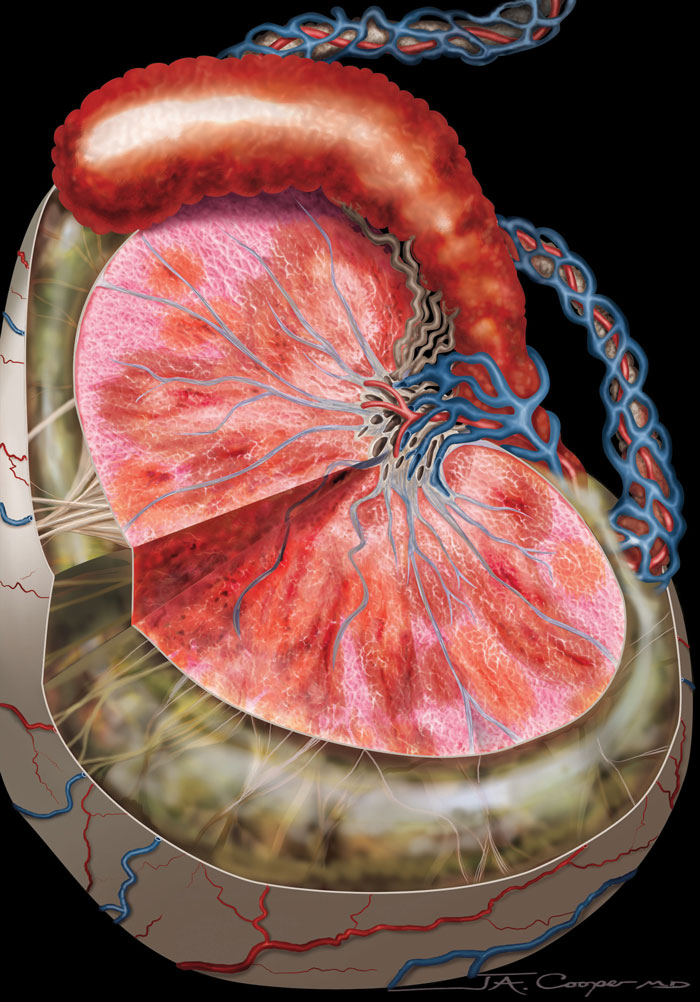
EXTERNAL WEBLINKS
British Association for Sexual Health and HIV (BASHH)
Patient information leaflet on orchitis
Medicines and Healthcare products Regulatory Agency (MHRA)